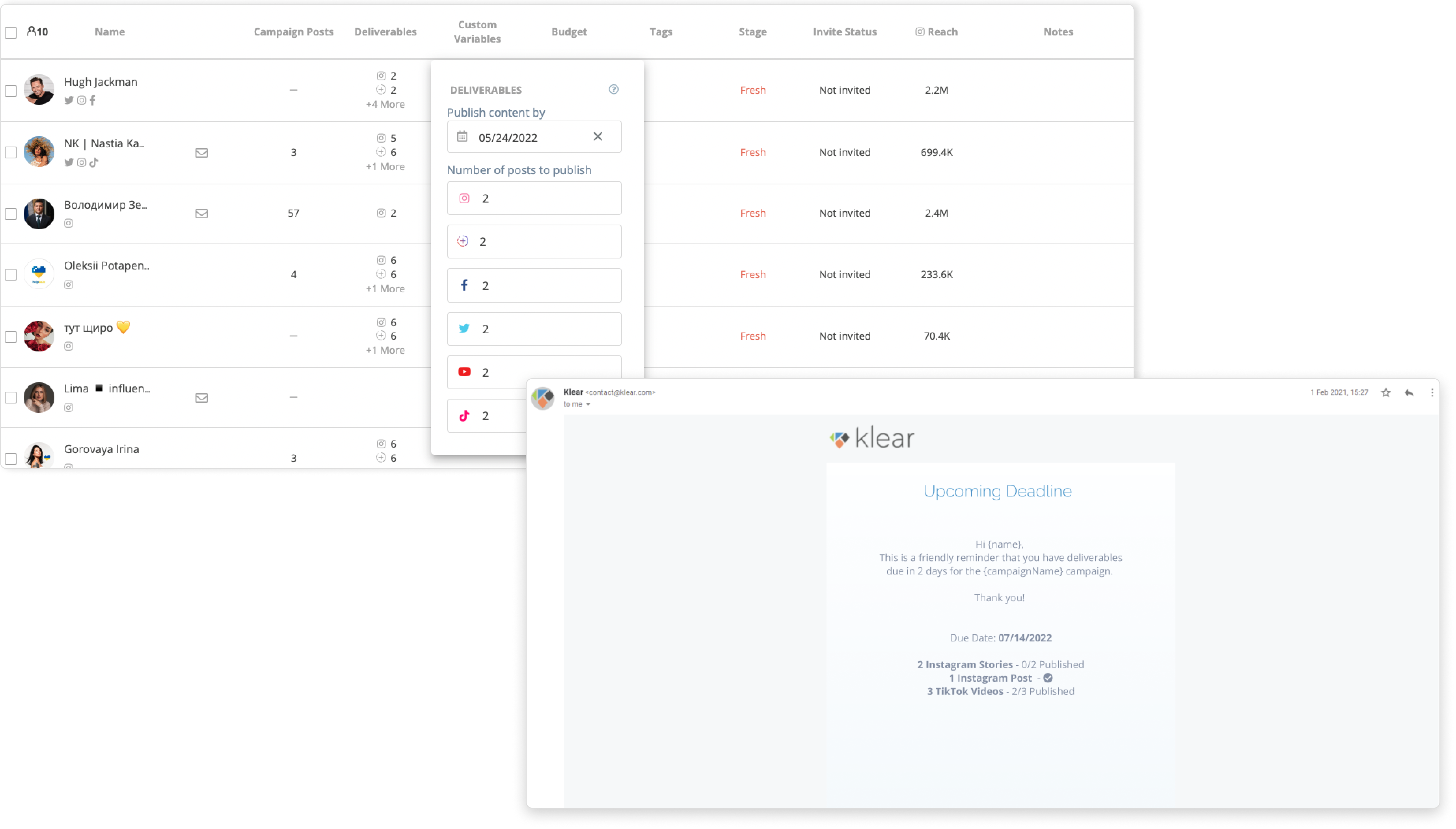
The Problem
Deliverables Existed, But Planning Didn’t
As campaigns grew in complexity, managing deliverables per influencer was no longer enough. Teams needed a way to understand campaign pacing across time.
As campaigns grew in complexity, managing deliverables per influencer was no longer enough. Teams needed a way to understand campaign pacing across time.
Observed campaign managers
Internal operations feedback
Feature adoption analysis
Competitive review
Campaigns span months, not weeks
Managers think in milestones
Risk must be visible at a glance
Detail is needed only on demand
Influencer schedules change frequently
Campaign managers needed to understand workload distribution across time before managing individual influencer details. The interface prioritizes a clear monthly overview first, with deeper management available on demand.
Operational risk should be visible without effort. Aggregated daily counts and progress fractions allow managers to immediately detect missing deliverables or overloaded days.
Daily cells summarize deliverables across networks to reduce cognitive load. Clicking into a specific day reveals influencer-level detail and editing capabilities when precision is required.
Drag-and-drop interactions were intentionally avoided to reduce accidental errors and preserve scheduling accuracy. In a professional SaaS environment, reliability and clarity were prioritized over novelty.
Campaign managers needed visibility across time, Not just per influencer.The solution introduces a calendar layer that transforms deliverables into a structured, time-based operational system.
Forecast workload across multiple months
Identify peak days and pacing gaps
Surface incomplete deliverables instantly
Understand campaign rhythm at a glance
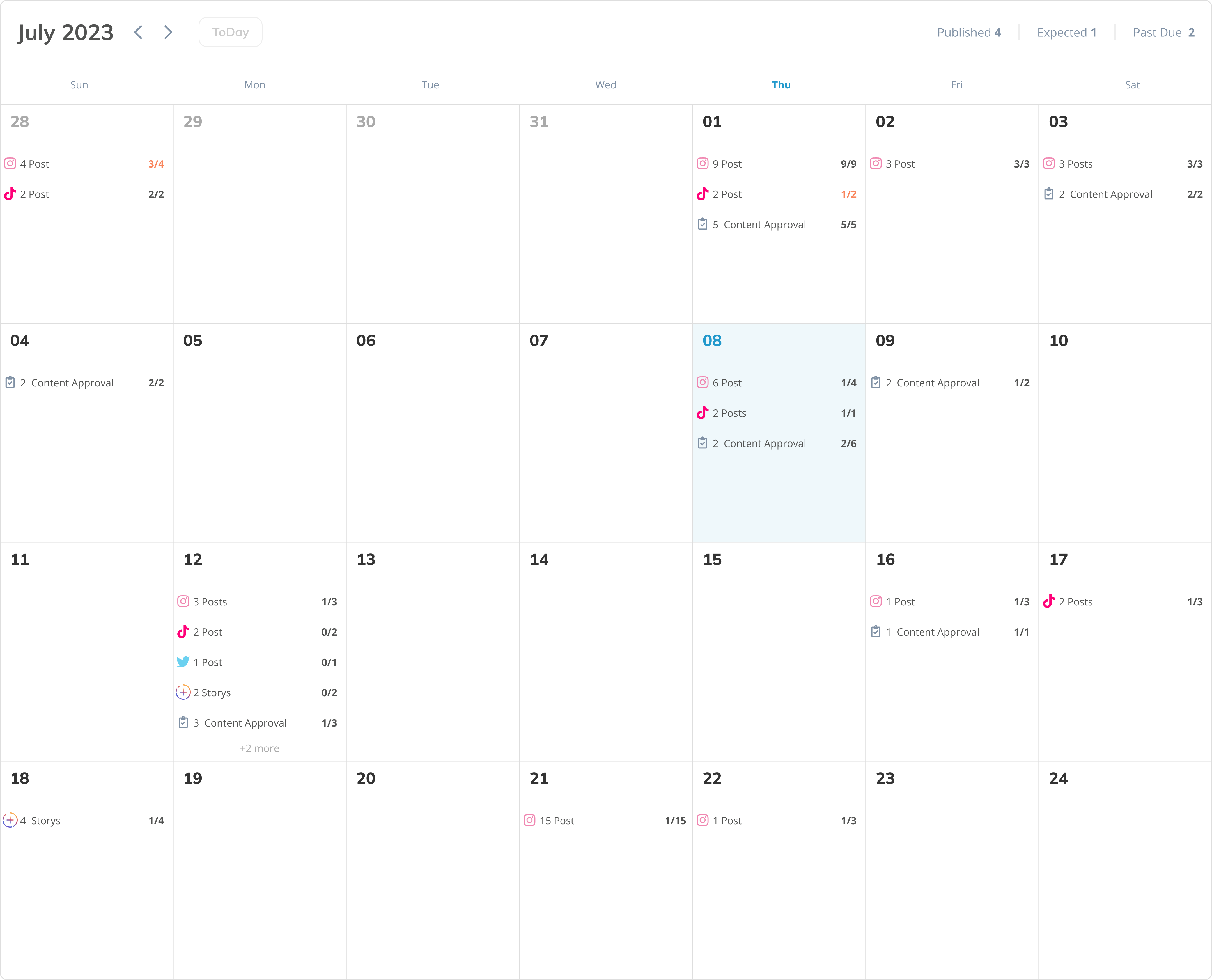
The monthly default reflects how campaigns are planned, in milestones, not rows.
Each calendar cell summarizes deliverables across influencers and networks.
Instead of listing every influencer, the system shows:
Network indicators
Deliverable counts
Surface incomplete deliverables instantly
The numeric format makes risk visible instantly.A day showing “1/3” signals incomplete execution without needing to open details.
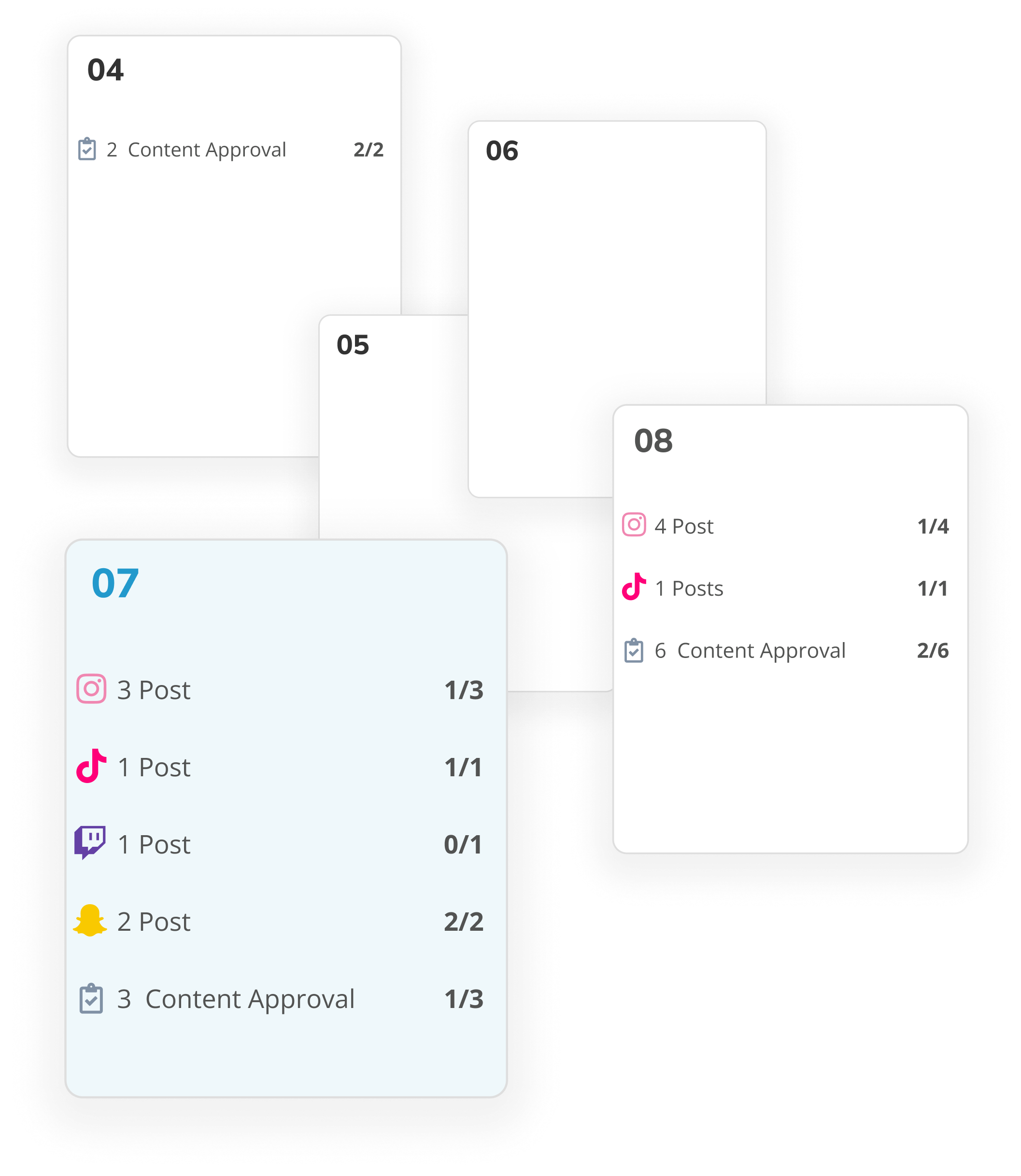
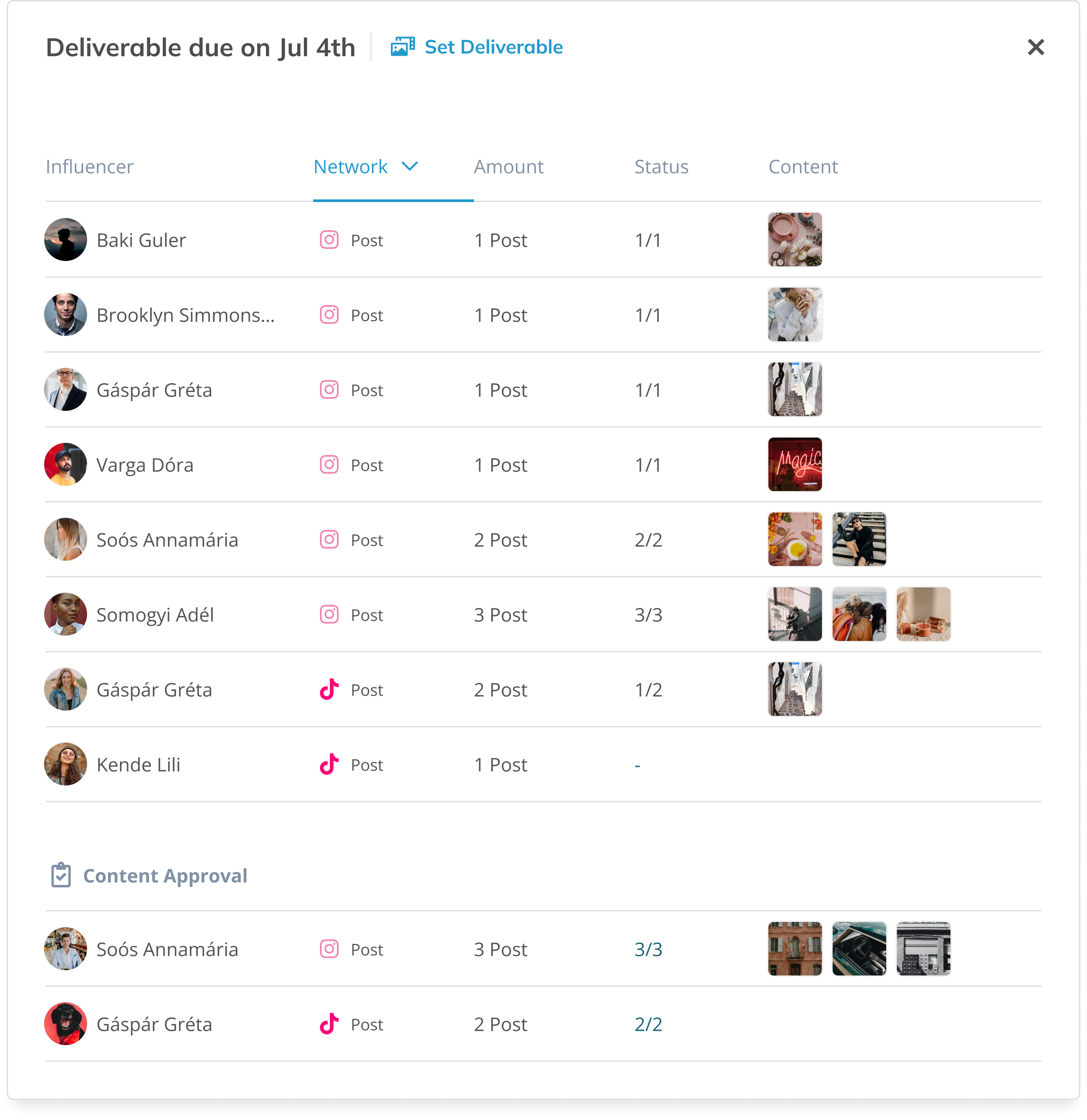
Clicking a specific day opens a management layer where deliverables shift from aggregated view to influencer-level control.
Managers can:
Edit deadlines
Adjust quantities
Reschedule approvals
Manage multiple networks
This layered interaction supports both strategic planning and tactical execution.
Previously, deadline tracking relied heavily on email reminders.By surfacing overdue deliverables directly inside the calendar,risk detection moved into the product itself.
Managers could now detect issues earlier and adjust campaign pacing before deadlines were missed.
Deadlines automatically adapt to the viewer’s timezone,reducing cross-region scheduling friction.
No drag-and-drop
Monthly default view
Aggregated daily cells
No cross-campaign view
arrow-right
arrow-down
Reduced errors and dev complexity
Matches campaign pacing
Reduces cognitive overload
Influencer workflows remained fluid
Strong initial adoption
Increased approval usage
Competitive differentiation
Adoption declined over time
Required behavioral reinforcement
Influencer workflows remained fluid and hard to rigidly schedule
Planning tools require behavioral integration, not just interface clarity.
While the calendar introduced visibility and structure, sustained usage depended on behavioral reinforcement, onboarding integration, and alignment with the fluid nature of influencer workflows.
If revisiting this solution today, I would explore:
Dynamic rescheduling suggestions when deadlines shift
Automated risk alerts based on incomplete progress
Stronger onboarding integration to build habit formation
Proactive nudges tied to campaign milestones
This project strengthened my understanding that successful workflow tools must balance structure with flexibility,
especially in fast-moving industries like influencer marketing.
Great tools reduce friction, but great systems align with human behavior.